Menu
 Skip to content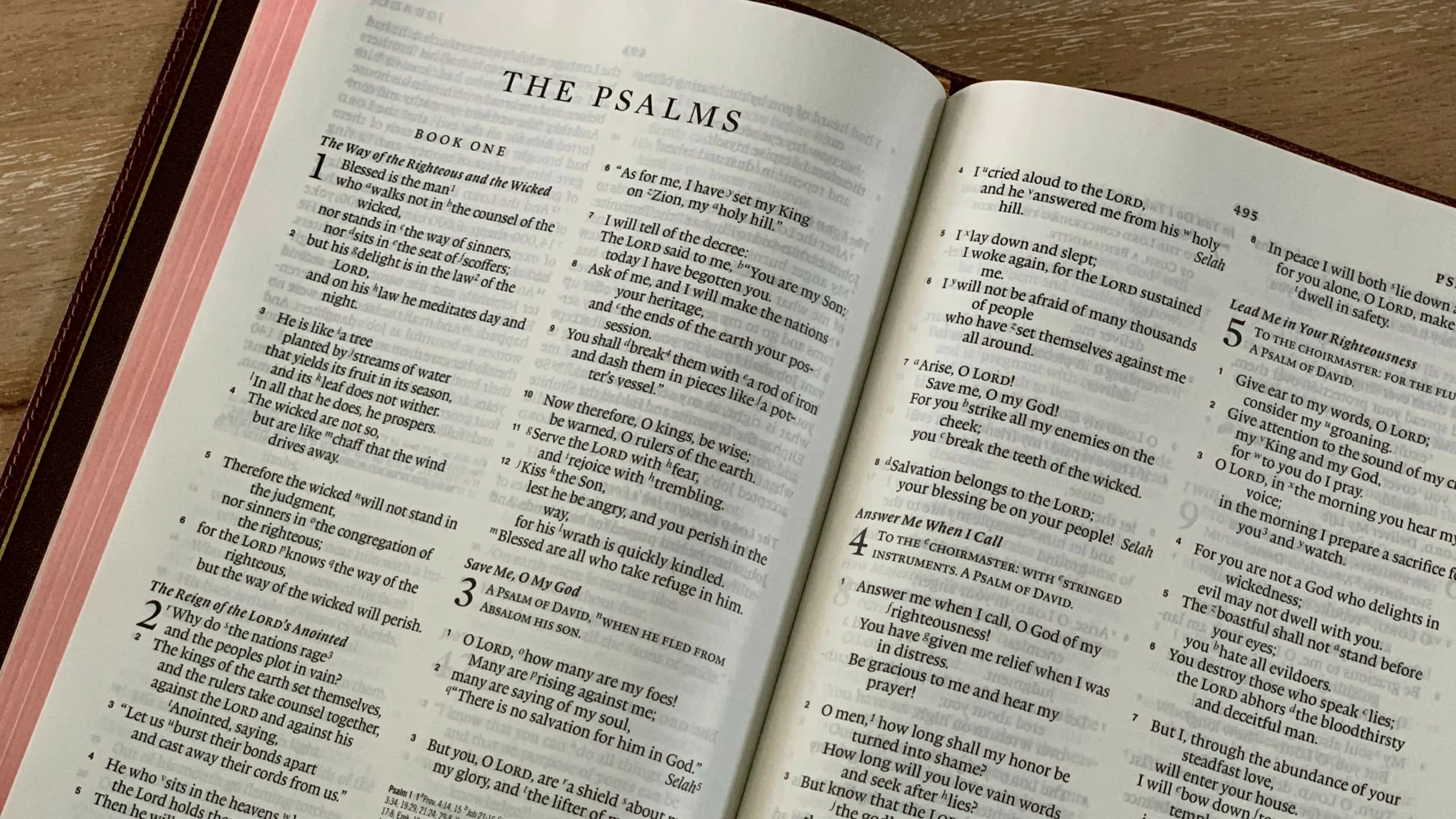
The Book of Psalms holds a central and enduring place in the practice of Hoodoo, also known as Black American rootwork or conjure. The use of the Bible, especially the Book of Psalms, in Hoodoo reflects our: history, survival, and spiritual power shaped under conditions of enslavement and resistance in the United States. White supremacy never would’ve expected that the same book that was forced upon us would be the same one that helped preserve our history and spirituality. In Hoodoo, the Book of Psalms is a: living spellbook, prayer book, and weapon of survival. Our Black American ancestors transformed Christianity, an imposed religion, into a source of personal and communal power. Whether for: love, money, protection, or justice, the Book of Psalms is by far the most respected spiritual tools that we rely upon in this tradition.
1. Historical Access to Power
Enslaved Africans and Foundational Black Americans were often denied access to their traditional spiritual systems, but they were given the Bible. The Book of Psalms is filled with: poetic language, petitions, blessings, and curses. This eventually became a our spiritual technology that could be repetitively: spoken, memorized, prayed, and activated without tools or literacy!
2. Spoken Word as Spiritual Force
In the practice of Hoodoo, we place great emphasis on the power of the spoken word. The Book of Psalms are essentially: spoken prayers, cries for justice, commands against enemies, calls for protection, and affirmations of abundance. This aligns closely with African spiritual traditions where words themselves are acts of power.
3. A Complete Spiritual System
The Book of Psalms contains every human condition such as: love, fear, anger, revenge, hope, poverty, wealth, illness, and triumph. Because of this, rootworkers came to see the Book of Psalms as a fierce spiritual toolkit that was highly effective for both blessing and cursing.
4. Christian Framework with Black American Practice
While the language is biblical, the way that the Book of Psalms is used in Hoodoo is more aligned with African and other indigenious practices. In Hoodoo, we recite the Psalms over: Spell Candles, Spiritual Baths , Conjure Oils, Roots and Herbs , Sachet Powder, Talismans and Amulets, and Mojo Bags.
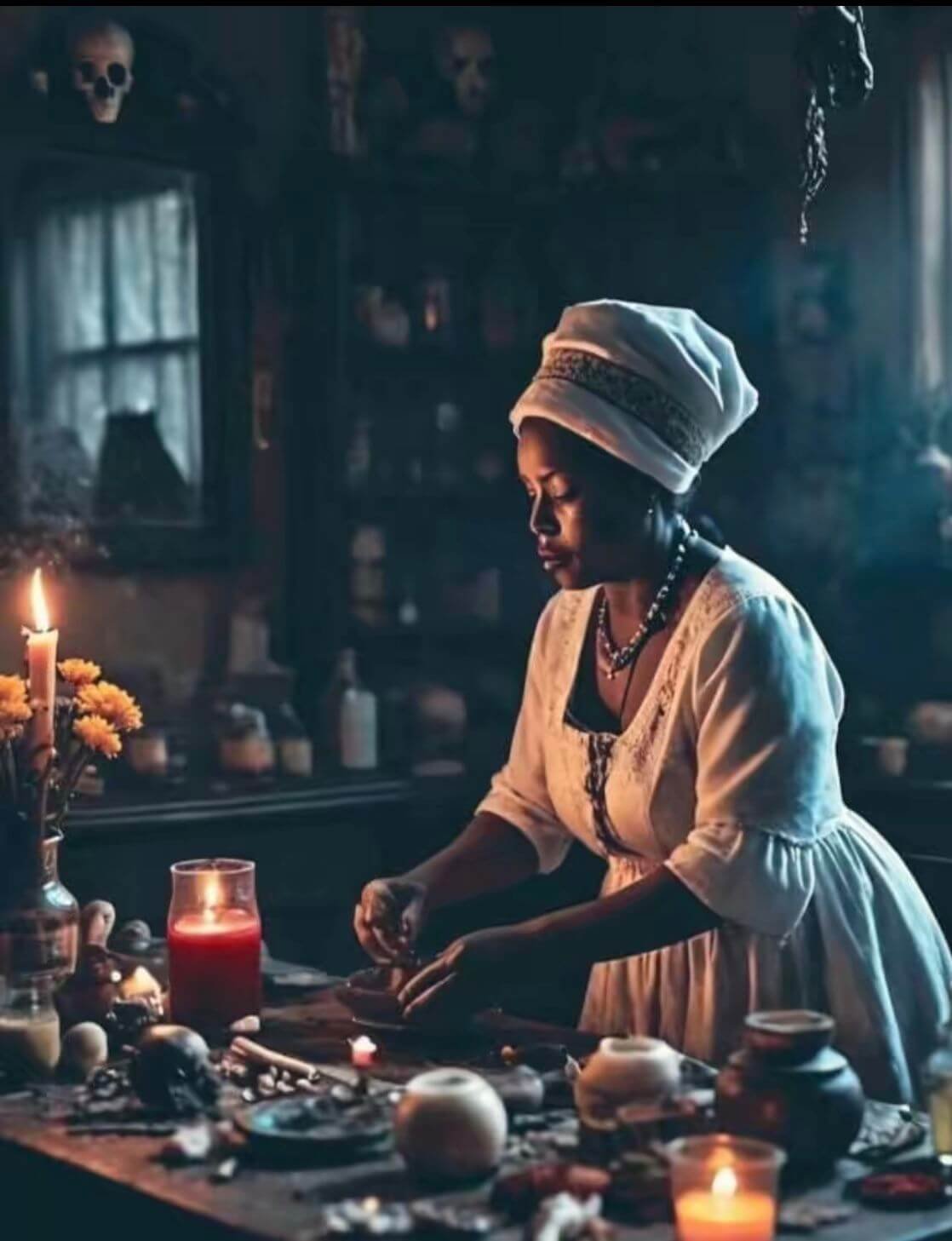
Hoodoo practitioners will usually:
The verses in the Book of Psalms isn’t just simply read—it is worked.
Here are some of the Psalms that are commonly used in Hoodoo for different situations in life. These are just a few examples that don’t even scratch the surface of the tons of others that are used everyday.
In Hoodoo, love and attraction work is designed to: dominate, manipulate, influence, and atrract romantic partners and strengthen bonds.
Psalm 111
“Praise ye the Lord. I will praise the Lord with my whole heart, in the assembly of the upright, and in the congregation…”
Psalm 45
“My heart is inditing a good matter…”
Money, prosperity, and success workings in Hoodoo is understood as survival work, dignity work, and access work—not for greed. It is about securing: stability, opportunity, and rightful reward in a society that has historically denied all three to Black Americans who are the foundation of this country.
Psalm 23
“…my cup runneth over.”
Psalm 112
“Wealth and riches shall be in his house…”
In Hoodoo practice, the use of protection and defense work are practical measures taken to preserve one’s: life, luck, peace, and spiritual authority in a world of harm. Protection work is considered foundational not optional.
Psalm 91
“He that dwelleth in the secret place of the most High…”
Psalm 27
“The Lord is my light and my salvation; whom shall I fear?”
In Hoodoo, road opening and removing obstacles is seen as a practical spiritual correction—clearing conditions that block a person’s progress in life.
Psalm 65
“Thou crownest the year with thy goodness…”
Psalm 24
“Lift up your heads, O ye gates…”
Cursing in Hoodoo is seen as justice work—returning harm, stopping oppression, or calling for divine judgment.
Psalm 109
“Let his days be few; and let another take his office.”
Psalm 35
“Let them be confounded and put to shame that seek after my soul…”
In closing I will say that: Wiccans have The Book of Shadows, Judaism has the The Kabbalah, the Ancient Egyptians had The Book of The Dead, Hinduism has The Atharvaveda and we have The Holy Bible or more specifically The Book of Psalms.
 Optimized by Seraphinite Accelerator